Table of contents
If you've been hearing about it for a while in the context of hair, nails or energy and still aren't sure what's true behind the name, this article will make it very clear. Here you'll find what the science supports about biotin (B7) and what makes sense in practice.
What biotin is and why the body needs it
Biotin is a B vitamin, specifically B7, also known in some countries as vitamin H. It belongs to the family of micronutrients the body can't make on its own, which means you necessarily have to get it from external sources: your diet or, when that doesn't provide enough, supplementation.
Its role in the body centres on essential metabolic processes. Biotin acts as a coenzyme in converting the macronutrients you eat (carbohydrates, fats and proteins) into energy your cells can use.
Biotin also contributes to the normal functioning of the nervous system and to normal psychological function, something the European Food Safety Authority officially recognises.
Properties of biotin recognised by scientific evidence
When we talk about the properties of biotin, it's worth separating what is backed by evidence from what is simply popular. The health claims officially recognised in Europe are specific:
- Contributes to normal energy-yielding metabolism. It's involved in how the body processes what you eat and turns it into energy.
- Contributes to normal macronutrient metabolism. It takes part in breaking down carbohydrates, fats and proteins.
- Contributes to the normal functioning of the nervous system. It's needed for the nervous system to work properly.
- Contributes to normal psychological function.
- Contributes to the maintenance of normal hair, skin and mucous membranes.
An authorised claim describes a normal body function, but it doesn't guarantee that supplementation will produce a visible improvement in someone whose levels are already adequate.

Benefits of biotin for hair, skin and nails
Hair contains keratin, but the authorised claim for biotin is limited to contributing to the maintenance of normal hair.
Biotin deficiency is uncommon and may be associated with changes in hair and skin, but these signs, along with brittle nails, are non-specific: they don't allow a deficiency to be diagnosed and don't in themselves justify starting supplementation without a professional assessment.
There is no specific authorised claim for biotin and nails, although many hair and nail formulas include this ingredient; you can find them in our hair and nail supplements. If you regularly notice brittle nails or slow nail growth, it's worth checking whether there's an underlying deficiency or other causes.
Biotin contributes to the maintenance of normal skin. Skin changes such as dryness, eczema or redness have many causes and may need a professional assessment. If you'd like to explore supplement options focused on skin health, take a look at our skin supplements.
Foods rich in biotin and when diet isn't enough
Biotin is naturally present in many common foods. If you eat a balanced, varied diet, you're probably already covering a good part of your daily needs. The foods richest in biotin are:
- Egg yolk and organ meats such as liver
- Nuts: almonds, walnuts and cashews
- Oily fish and shellfish
- Pulses, especially soya
- Vegetables such as broccoli, spinach and sweet potato
- Banana and avocado
- Wholegrain cereals
On very restrictive diets or in cases of diagnosed malabsorption, it may be useful to review biotin intake with a healthcare professional, whereas pregnancy, stress, intense exercise or veganism don't automatically justify biotin supplementation.
A little-known fact: raw egg white contains a protein called avidin that can block biotin absorption. If you regularly eat large amounts of uncooked egg whites, this can affect your levels. Cooking inactivates this protein, so there's no cause for alarm if you only eat them occasionally.
When it makes sense to take biotin as a supplement
Biotin isn't recommended as universal prevention; every case needs an individual assessment.
|
Situation |
Does supplementing make sense? |
Why |
|
Varied diet with no symptoms |
Not necessarily |
Levels are usually covered by a normal diet |
|
Fragile hair or hair loss |
Review with a professional |
The underlying cause needs to be identified |
|
Brittle nails |
Review with a professional |
Not an automatic sign of deficiency |
|
Pregnancy or breastfeeding |
Consult a professional |
There are nutritional changes a specialist should assess |
|
Restrictive or vegan diet |
Assess dietary intake |
Not automatic preventive supplementation |
|
Stress or tiredness |
Not automatically |
Other factors may explain the symptoms |
|
Menopause |
Not an indication on its own |
Changes in hair and skin during menopause have various causes and need an individual assessment |
One important point: hair loss, brittle nails or skin changes can have many different causes. If these symptoms are persistent or intense, it's advisable to consult a professional to identify what's really going on.
How to take biotin and what dose is usual
How you take it depends on the specific product. Always follow the label directions for the hair and nail food supplements you take, as the dose varies depending on the formulation and the other ingredients included.
If you have questions about the right dose for your situation, any medication you take, or if you're pregnant or breastfeeding, the most sensible thing is to consult a professional.
There's no universally established best time to take it. It's important to follow the label instructions and, if the dosage allows, you can choose a time that's easy to remember so you don't forget your dose.
There's no universal timeframe for seeing changes and no guaranteed results. You shouldn't extend the duration or increase the dose on your own initiative, and any assessment of whether the approach is appropriate should be made with a healthcare professional.
Biotin and menopause, pregnancy and other stages of higher demand
During pregnancy and breastfeeding, you shouldn't start or adjust any supplement containing biotin without first reviewing the product's full composition with a healthcare professional.
Menopause alone is not an indication for taking biotin, since changes in hair and skin have various causes that require an individual assessment of each case.
 Calcium gummies with probiotics
Precautions and what you should know before starting
Biotin can interfere with some thyroid tests and other laboratory tests. If you're having a blood test, tell your doctor or the laboratory that you take biotin and always follow their instructions.
Side effects vary depending on the supplement's formulation and the other ingredients it contains. It's important to check the full label to understand the tolerance profile of the specific product you're going to use.
Supplementing without an underlying deficiency has a limited impact. If your levels are already adequate, adding more biotin won't amplify the results. That's why, before starting any supplementation, it's useful to assess whether there really is a deficiency or a situation that justifies the extra intake.
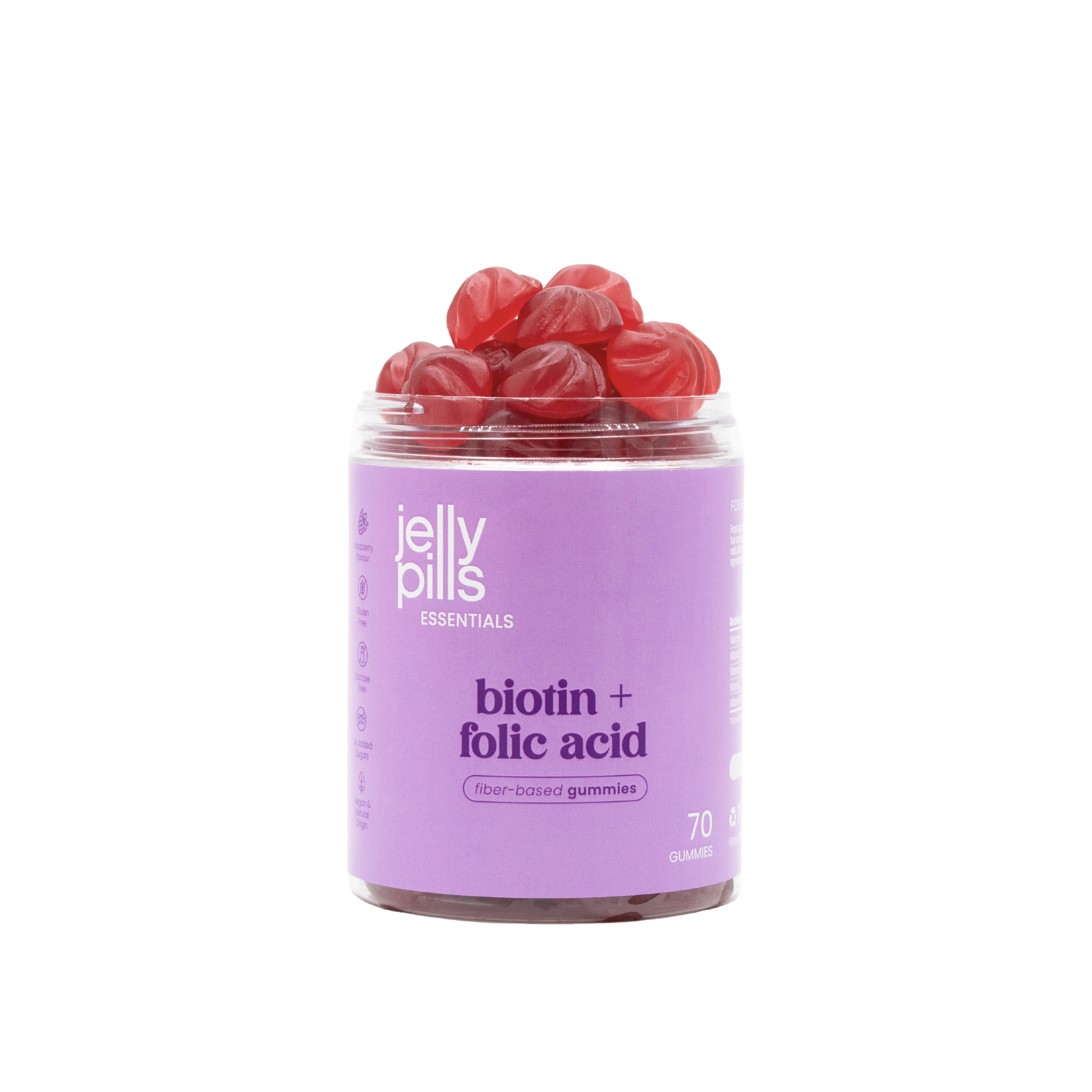
Jelly Pills offers supplements in gummy format. Always check the product label, as these supplements do not replace a balanced diet or medical treatment.
What biotin can and can't do for you
Biotin is an essential vitamin with real, recognised functions: it contributes to energy-yielding metabolism, to the functioning of the nervous system and to the maintenance of normal hair, skin and mucous membranes. When there's a deficiency, correcting it makes sense. However, it isn't a miracle supplement. If you'd like to find out more about biotin and other ingredients, take a look at the Jelly Pills ingredients glossary.
It only makes sense to take it if your diet doesn't cover identified needs or there is a diagnosed and assessed deficiency, since isolated symptoms don't confirm a deficiency, and people with adequate levels shouldn't expect additional benefits from supplementation.